UK photo specification
UK Passport Photo Size: 35 x 45mm, and the rules that go with it
UK passport photo size is 35mm wide by 45mm high, with your head 29–34mm from chin to crown. Digital photos need 600x750 pixels minimum.
UK Passport Photo Size at a glance
Swipe the table sideways for detail →
| Requirement | Specification | Detail |
|---|---|---|
| Printed size | 35 x 45mm | Width by height — the standard UK photo-booth size |
| Head height | 29–34mm | Crown of the head to the bottom of the chin |
| Digital minimum | 600 x 750px | Width by height, at least |
| File size | 50KB – 10MB | Below 50KB is rejected as too low quality |
| Age of photo | Within one month | The strictest recency rule of the five here |
| Background | Plain, light-coloured | No pattern, no objects, no shadow |
Source: HM Passport Office — Get a passport photo (GOV.UK). Checked 12 August 2026. Requirements change — confirm against the issuing authority before you submit.
The 35 x 45mm figure, and the head measurement underneath it
Thirty-five millimetres wide by forty-five millimetres high is the number almost everyone arrives looking for, and it is the easy half of the specification. It matches what UK photo booths have produced for decades, which is why a booth strip drops straight into an application without anyone having to think about it.
The harder half is the head measurement. From the crown of your head to the bottom of your chin the image must fall between 29mm and 34mm. That is a five-millimetre window inside a forty-five-millimetre frame, so roughly two-thirds to three-quarters of the height is face. Get the outer rectangle exactly right and the head wrong and the application still fails, which is the single most common way a home-cropped photo comes back.
Working backwards is easier than guessing. Decide where the chin sits, decide where the crown sits, and let the frame follow from those two points rather than cropping a pleasing rectangle and hoping the face lands correctly inside it.
Passport photo size UK: what changes when you go digital
Applying online replaces millimetres with pixels. The photo must be at least 600 pixels across and 750 tall, and the file must weigh between 50KB and 10MB. The proportions are the same 35:45 relationship expressed at a different scale, so a correctly composed print and a correctly composed upload are the same photograph.
The lower file-size bound catches people out more than the upper one. Phone gallery apps and messaging apps compress aggressively on share, and a photo that arrives at 40KB is refused for quality even though it looks perfectly sharp on the screen you are looking at. Send yourself the original file rather than a shared copy.
A booth that offers a digital code is doing this step for you. If you are cropping your own, hit the pixel floor with room to spare — 900 x 1125 or larger costs nothing and survives whatever re-encoding happens along the way.
Taken in the last month, which is unusually strict
Most countries allow six months. The UK asks for one. In practice nobody measures the age of a photograph forensically, but the rule exists because the passport is supposed to show how you look now, and an examiner comparing your photo to the person at the desk is the check that actually bites.
The practical reading is that a photo from a holiday last year is not usable even if it happens to have a plain wall behind it. If your appearance has changed noticeably — a beard shaved, hair cut short, glasses gone — take a new one regardless of what the date stamp says.
Glasses, head coverings and expression
Do not wear glasses unless you have to. If you must, they cannot be sunglasses or tinted, and your eyes cannot be covered by the frames or by any glare, reflection or shadow. The failure mode is almost always reflection rather than the frames themselves, and it comes from a light source directly in front of you.
Head coverings are not permitted unless they are worn for religious or medical reasons, and where they are worn the face must remain visible from the bottom of the chin to the top of the forehead.
Expression is plain and the mouth is closed. Eyes open, visible, and no hair falling across them. This is where a photograph taken casually fails most often — a natural photograph of a person almost always has some expression in it, and the specification is asking for the absence of one.
What LaFoto does and does not do with a UK passport photo
It does not generate one. A passport photograph has to be a photograph of you, taken recently, and a face produced by an image model is not that regardless of how convincing it looks. Submitting one is document fraud, and no amount of search traffic makes that a service worth offering.
What genuinely helps is the boring part: the free image cropper takes a photograph you already have to the 35:45 proportion with the head where it needs to be, the image resizer hits the 600 x 750 pixel floor exactly, and the image compressor moves a file into the 50KB–10MB band without visible loss. All three run in the browser, so a photograph of your face is never uploaded anywhere.
If the background behind you is cluttered rather than plain, that is a reshoot rather than an edit. Stand roughly a metre in front of a plain light wall, face a window, and have someone photograph you from about a metre and a half away at eye level — distance from the wall removes your shadow, distance from the lens removes the facial distortion that an arm's-length phone photo always adds.
The free tools that get you to 35 x 45mm
- Runs in
- Your browser — nothing uploaded
- Account
- Not required
- Cost
- Free, no watermark
- Works offline
- After the page loads
- Formats
- JPEG, PNG, WebP
- File limit
- Your device memory, not a quota
The UK specification
The five-millimetre window nobody reads about
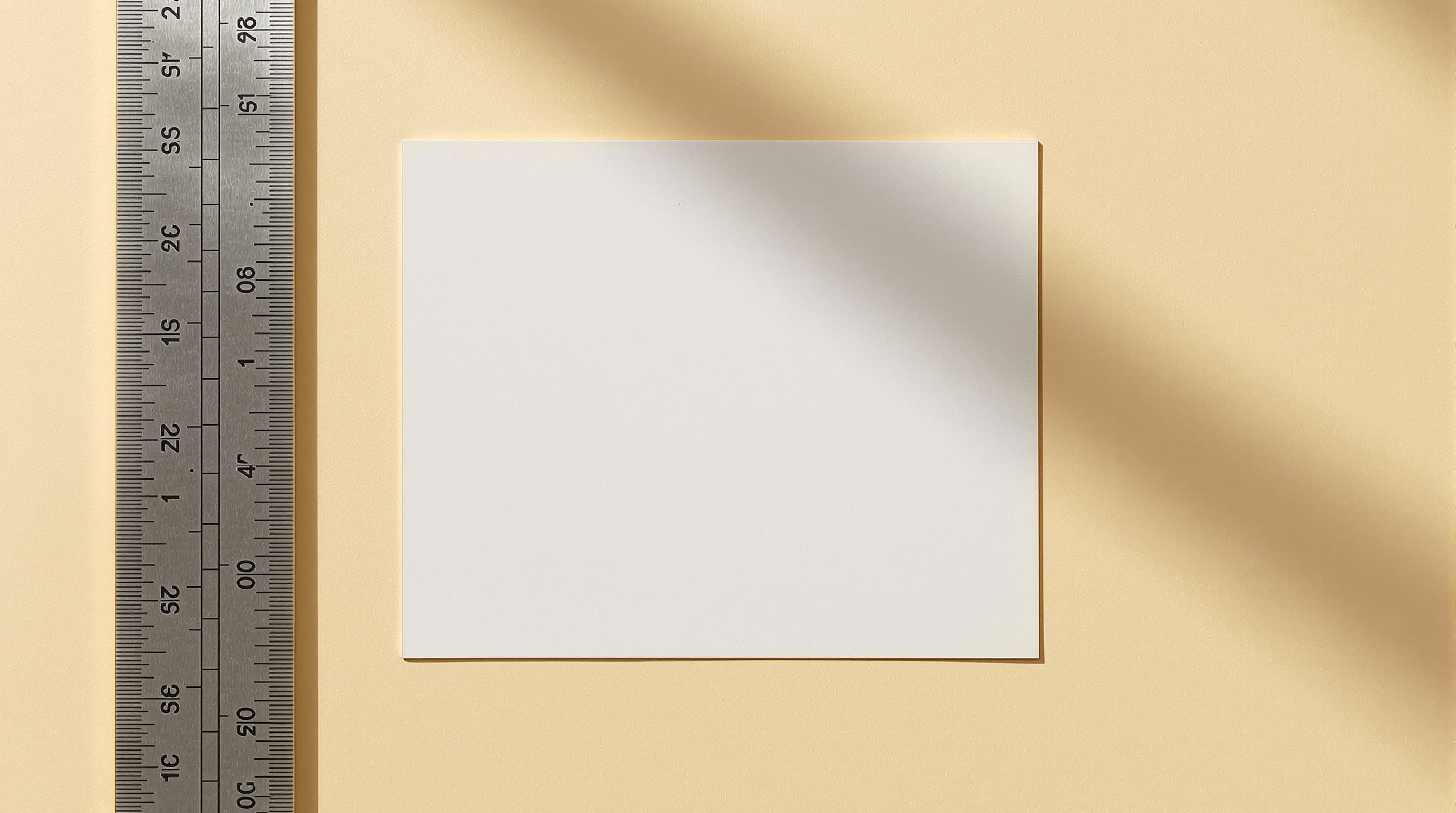
Thirty-five by forty-five is the number everyone quotes and the easy half of the rule. Underneath it sits the head measurement: crown to chin between 29mm and 34mm, a five-millimetre window inside a forty-five-millimetre frame.
Get the rectangle exactly right and the head wrong and the application still fails. Compose to the chin and the crown, then let the frame follow from those two points — cropping a pleasing rectangle and hoping the face lands correctly is how a home-made photo comes back rejected.
Three routes to a compliant photo
Booth, studio, or a phone and a plain wall
The path of least thought
UK booths have produced 35 x 45mm strips for decades, and the ones offering a digital code hand the online application its file already sized and weighted correctly.
You are paying for the composition problem to be somebody else's. For most people that is the right trade.
- Sized and composed for you.
- A digital code skips the upload rules.
- Costs more than nothing and less than a rejection.
A phone, a window and a plain wall
Stand about a metre from a plain light wall so your shadow does not fall on it. Have someone photograph you from roughly a metre and a half at eye level — an arm's-length phone photo distorts the face and cannot be corrected within the rules.
Then crop to 35:45 with the head at 29–34mm, and check the file is above 50KB.
- Distance from the wall removes the shadow.
- Distance from the lens removes the distortion.
- Daylight from in front, never overhead or flash.
Where millimetres become pixels
At least 600 by 750 pixels, and the file between 50KB and 10MB. It is the same 35:45 proportion at a different scale.
The lower bound catches more people than the upper. Messaging apps compress on share, and a 40KB file is refused for quality even though it looks sharp.
- Send yourself the original, not a shared copy.
- 900 x 1125 or larger costs nothing.
- Both bounds are enforced automatically.
UK photo problems
Why an otherwise correct photo gets rejected
The failures that come up most, and what causes each.
A shadow on the wall behind you
You stood too close to it. About a metre of separation removes the shadow entirely, and no amount of editing afterwards is a legitimate fix.
Glare on your glasses
Caused by a light source directly in front of you. The rule allows glasses only if you need them, and reflection over the eye fails regardless of the frames.
The head is too small in the frame
The most common composition error. A photo showing your shoulders and some of the room puts the head well below 29mm once cropped to shape.
The file is under 50KB
Almost always because the photo travelled through a messaging app. Use the original file from the camera roll instead.
A slight smile
The requirement is a plain expression with the mouth closed. A natural photograph almost always has some expression in it, which is exactly what is being asked to go.
Hair across the eyes
Both eyes must be open and visible with nothing in front of them. A fringe that looked fine in the mirror often sits lower in a photograph.
The tools for the cropping half
What actually helps with a UK passport photo
Beyond documents
What LaFoto is actually for
Not passport photos. Original images made from a description.
- resize to exact pixels
- JPG, PNG and WebP
- image compressor
- image cropper
- colour picker from image
- cut out a subject
- EXIF viewer
- build a prompt
- anime image style
- cartoon AI generator
- make pixel art
- the ranked comparison
- compared with Midjourney
- compared with Leonardo
- LaFoto vs Ideogram
- LaFoto vs Canva
- seeds explained
- denoise strength explained
- editing inside a mask
- guides and explainers
UK passport photo questions
- What size is a UK passport photo?
- 35mm wide by 45mm high. The head, measured from crown to chin, must be between 29mm and 34mm within that frame.
- What size is a UK passport photo in pixels?
- At least 600 pixels wide by 750 pixels tall for a digital application, with the file between 50KB and 10MB. Larger is fine and safer.
- Can I use a photo from my phone for a UK passport?
- Yes, if it meets the rules — plain light background, plain expression, taken in the last month, and cropped to the right proportion with the head at 29–34mm. Use the original file rather than one that has been shared through a messaging app, which compresses below the 50KB floor.
- How old can a UK passport photo be?
- It must have been taken within the last month. This is stricter than the six months most countries allow.
- Can I smile in a UK passport photo?
- No. The requirement is a plain expression with the mouth closed and the eyes open and visible.
- Can I wear glasses in a UK passport photo?
- Only if you have to. They cannot be sunglasses or tinted, and your eyes must not be obscured by the frames or by glare, reflection or shadow.
- What background does a UK passport photo need?
- A plain, light-coloured one with no pattern, no objects and no shadow falling on it. Standing about a metre away from the wall is what stops your own shadow appearing behind you.
- Can I use an AI-generated photo for a UK passport?
- No. The photograph must be a genuine recent photograph of you. A generated face is not, and submitting one is fraud. Cropping, resizing and compressing a real photograph is fine; inventing one is not.
Photo specifications for other countries
The rectangle is not universal. Compare before reusing a print anywhere else.
Start creating today
Generate your first image with the best AI image generator.
Turn a sentence into a finished, photorealistic image in seconds — then refine every detail. No setup, no Discord, no GPU.
Join 4,200+ creators using LaFoto